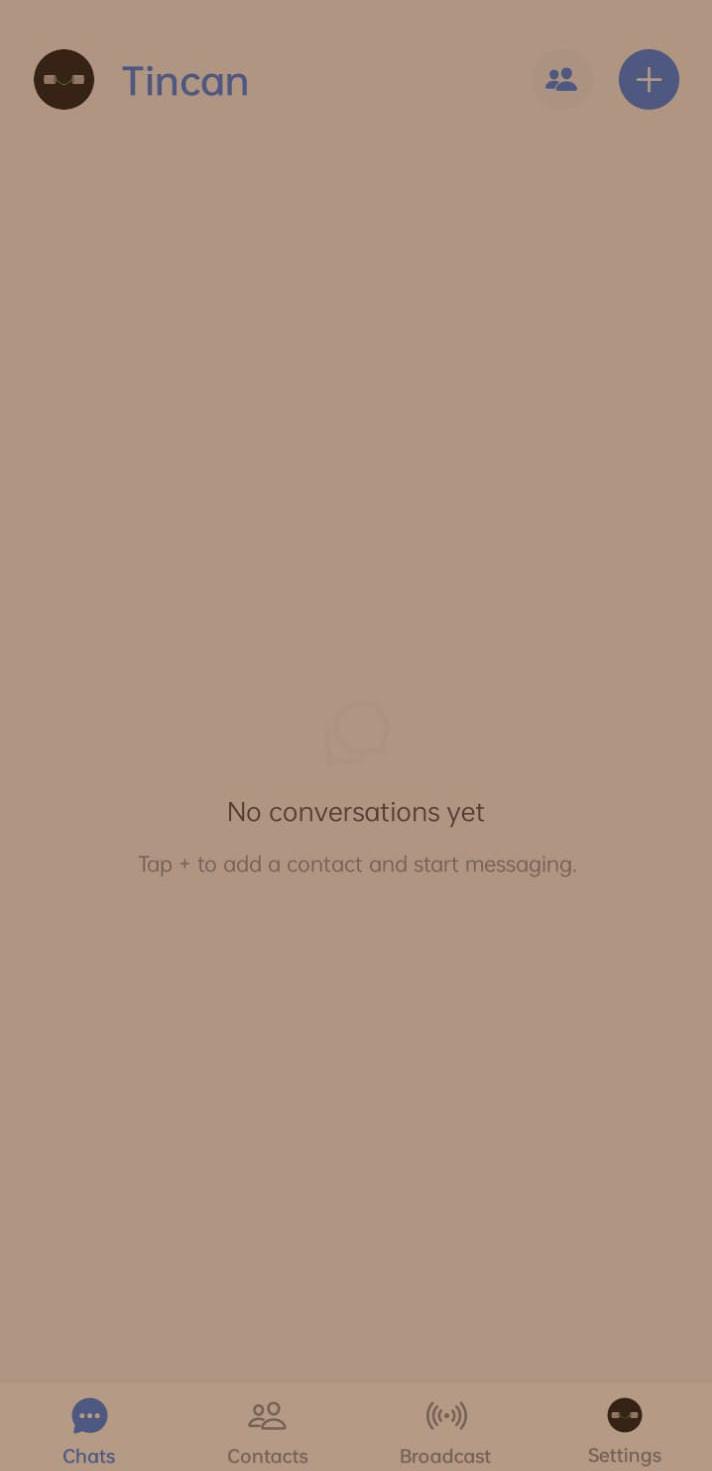
No phone numbers. No accounts. No central database. Messages travel directly device-to-device when you're both online — and when you're not, a cryptographically blind server holds an encrypted blob it cannot read, cannot link to you, and will never log.
Your identity is a cryptographic key generated locally. No SIM, no email, no username. You add contacts by scanning a QR code in person.
Padded payloads, anonymous delivery tokens, and jittered timing mean the server cannot tell who is talking to whom — or when.
When both users are online, messages route device-to-device via WebRTC. The "server" is just a blind mailbox for offline drops.
Three core mechanisms that make zero-trust messaging possible.
When both devices are online, messages, photos, and files travel directly from your device to theirs using WebRTC data channels. No servers listening in — just a direct, encrypted line between two cans.
If your friend is offline, your encrypted message is dropped into a random UUID slot. The server holds the blob but cannot link the slot to any recipient, sender, or conversation.
Add contacts by scanning a QR code in person or sharing a one-time connection link. This exchange bootstraps your encrypted channel and pre-shares anonymous delivery tokens.
Every pixel is designed for focus. No bloat. No noise. Just the conversation that matters.
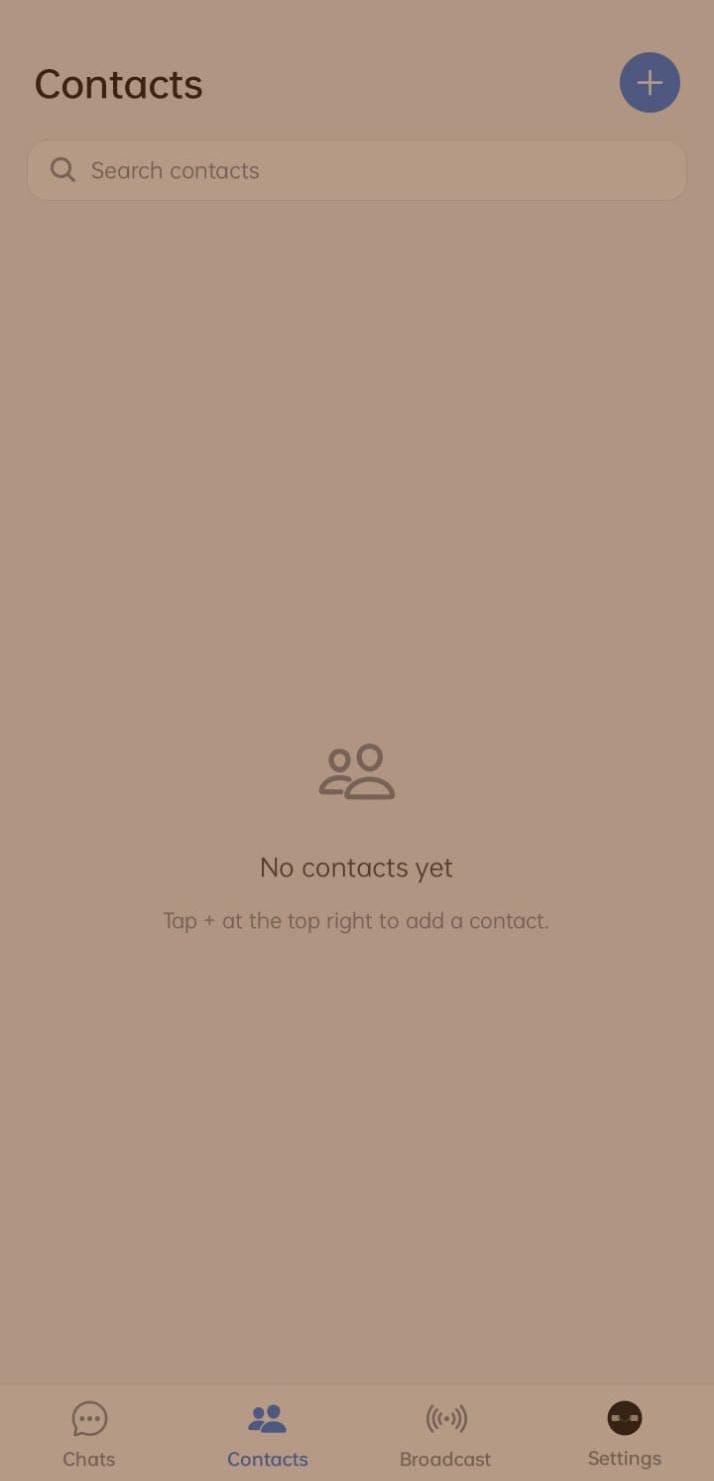
Add peers by scanning a QR code face-to-face. No directory, no discovery, no risk of impersonation.
When both devices are online, messages travel directly device-to-device over an encrypted WebRTC channel.
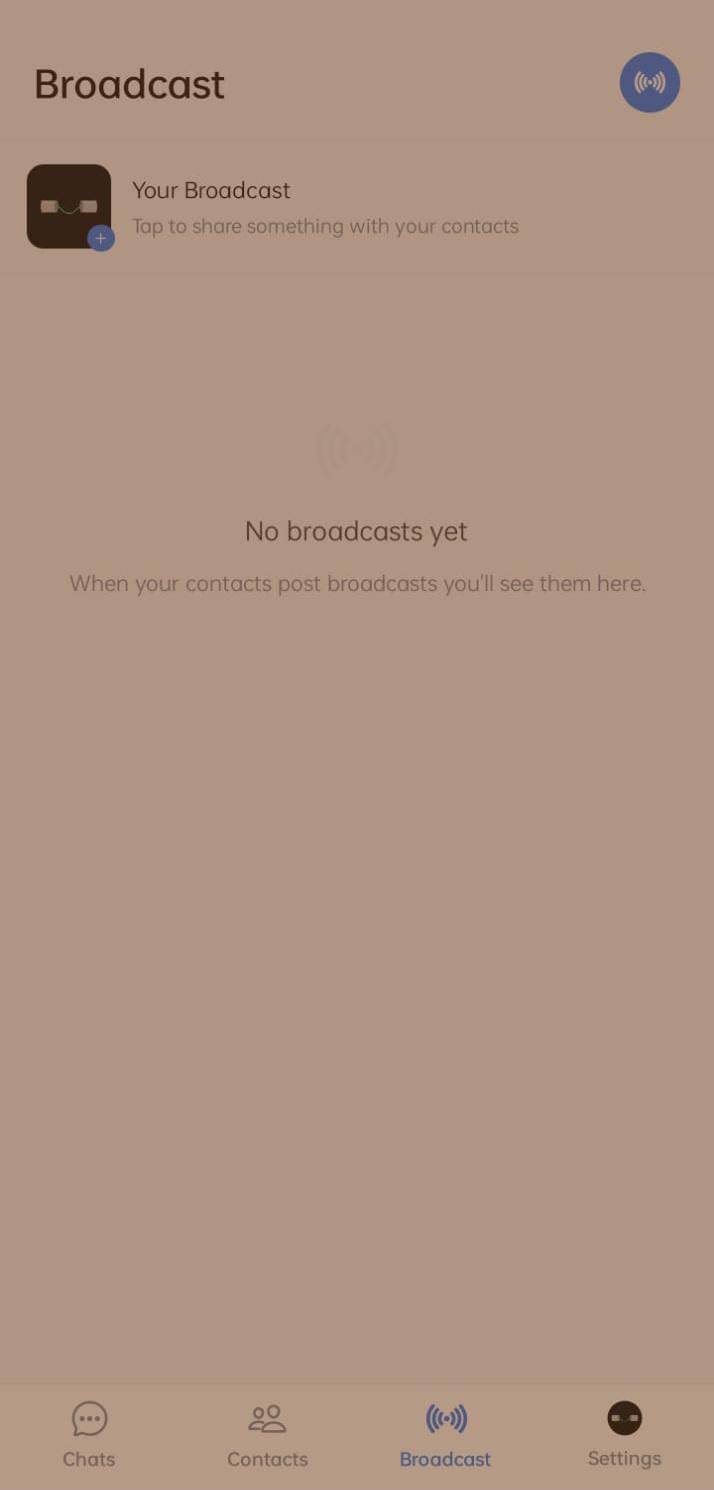
Publish status updates across your entire peer mesh simultaneously — with no central relay involved.
Every feature is designed to minimize trust and maximize privacy.
Every message is cryptographically sealed client-side before leaving your device. Decryption keys are generated locally and never shared with the network.
Direct peer-to-peer calling tunnels. Media streams route directly between caller and recipient, avoiding intermediary server interception.
Self-destructing message states. Messages delete permanently from local storage on both devices after the chosen time window expires.
Secure multi-party communication setup. Group configurations are managed entirely client-side without relying on central group directory servers.
Send photos, audio, and video files directly. Standardized sizing and padding patterns prevent observers from analyzing file types from transmission sizes.
Coarse availability updates. Status synchronization is designed to prevent long-term data collection of your behavior, sleep, or network usage patterns.
The security design and architecture powering Tincan.
Tin Can utilizes state-of-the-art end-to-end encryption. All communications—including text messages, media attachments, and real-time voice calls—are sealed client-side before transmission. The system relies on modern elliptic curve cryptography and symmetric keys that are generated and stored exclusively on your local device.
When you send a message to an offline contact, it is temporarily stored in a zero-knowledge virtual mailbox. The relay server holds the encrypted payload but has no connection logs, routing tables, or mapping to identify who sent it or who it is intended for. The recipient retrieves it anonymously.
To route messages without central accounts, contacts exchange cryptographic tokens directly during connection setup. These routing tokens are hashed and dynamically updated to ensure that network nodes can deliver envelopes without ever discovering your device's long-term identity or mapping your contact list.
To prevent metadata leaks, all message payloads are automatically padded to uniform, standardized sizes. This ensures an outside observer checking network packet sizes cannot distinguish between a short text message, a picture, or metadata updates.
Real-time voice and video calls use peer-to-peer tunnels. To protect your physical location, connection metadata is scrubbed of local network identifiers, prioritizing anonymous routing paths and routing through secure fallbacks when necessary.
Tincan is built on a highly optimized, cross-platform mobile client with a lightweight signaling and routing network. The local database uses robust client-side database encryption to ensure that even if a device is physically lost, the local chat database remains unreadable.
Content-secure like Signal. Server-blind like Briar. Lightweight like nothing else.
| Feature | Tincan | Signal | Telegram | |
|---|---|---|---|---|
| End-to-End Encryption | ✓ Client-Side E2EE | ✓ Signal Protocol | ✓ Signal Protocol | ⚠ Secret Chats only |
| No Phone Number Required | ✓ Cryptographic ID | ✗ Required | ✗ Required | ✗ Required |
| Server Cannot Read Messages | ✓ Blind router | ✓ Technically | ✓ Sealed sender | ✗ Cloud chats stored |
| No Central User Directory | ✓ No directory | ✗ Meta directory | ⚠ Phone registry | ✗ Phone registry |
| Anonymous Delivery Tokens | ✓ Yes | ✗ None | ✓ Sealed sender | ✗ None |
| P2P Video / Voice | ✓ Direct WebRTC | ✗ Tincaned | ✗ Tincaned | ✗ Tincaned |
| Server Cost Per User | ✓ ~$0 | ✗ $Billions | ✗ $Millions | ✗ $Millions |
| Open Source Client | ✓ Planned | ✗ Closed | ✓ Open | ⚠ Partial |
The client is fully auditable. Security researchers can verify that we genuinely cannot read your messages, cannot access your keys, and cannot map your social graph.